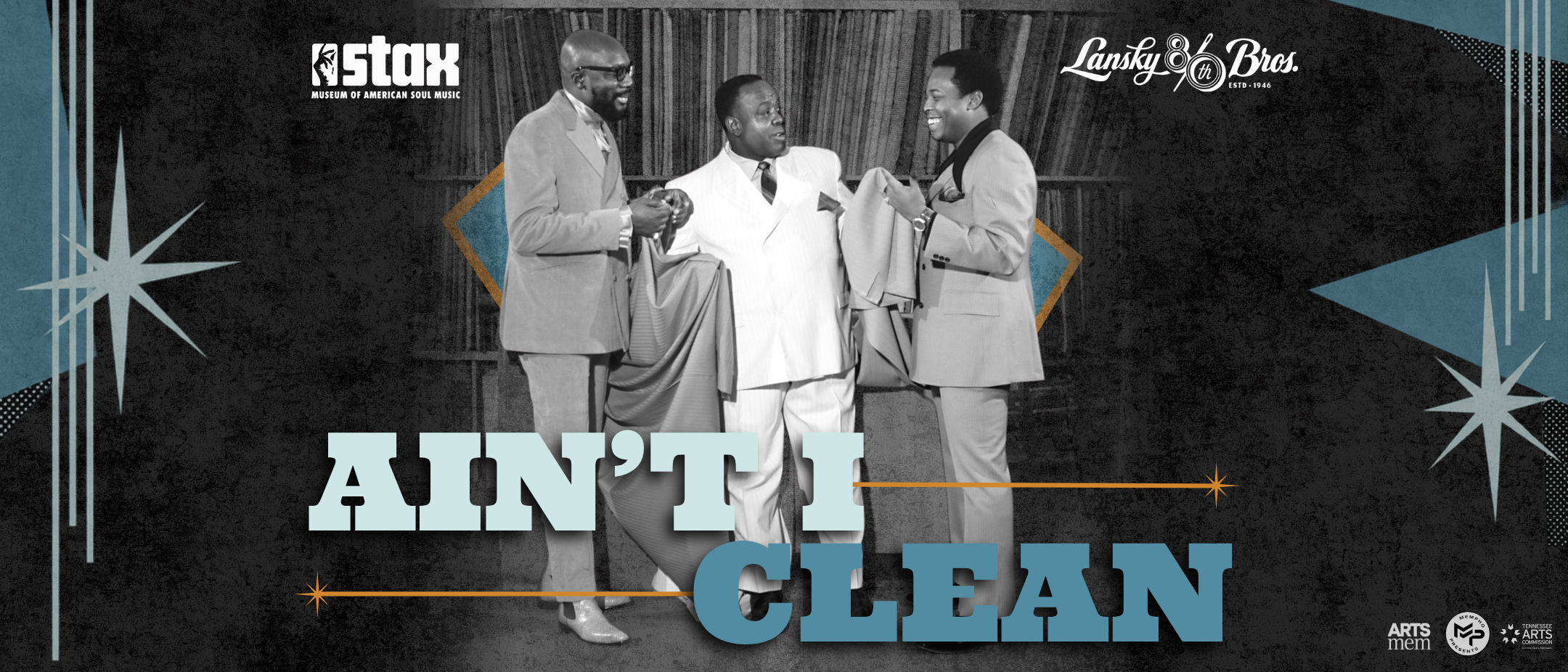
For Rufus Thomas, looking sharp was part of the show. Dressed in one of his unmistakable Lansky Brothers outfits, Rufus would open his jacket, look out at the audience and call, “Ain’t I clean?” The crowd knew exactly how to answer: “Lansky Brothers on Beale Street!”
That call-and-response said it all. Lansky Brothers wasn’t simply a place where Memphis musicians bought clothes—it was part of the performance, part of the culture, and part of the unmistakable style that helped define Memphis music.
Founded in 1946 by brothers Bernard and Guy Lansky at 126 Beale Street, Lansky Brothers quickly became one of Memphis’s most distinctive clothing stores. Bernard had an eye for what was next: bold colors, unusual fabrics, sharply tailored suits and fashions designed to make an entrance. On Beale Street, where music, fashion and culture came together, Lansky Brothers became known as the place to go when you wanted to be noticed.
From its earliest days, Lansky Brothers built a strong relationship with Memphis’s Black community. At a time when the city was deeply segregated, the store welcomed Black customers and employed Black salesmen. More importantly, Bernard listened to his customers. As their tastes evolved, Lansky’s evolved with them—from porkpie hats and sharply tailored suits in the 1950s to the colorful shirts, dramatic silhouettes and stacked-heel shoes of the 1960s and ’70s.
The musicians of Memphis became some of Lansky Brothers’ most loyal customers. B.B. King, Rufus Thomas, Bobby “Blue” Bland, Otis Redding, Isaac Hayes and David Porter were part of a remarkable musical community whose sound—and style—would influence generations. Nationally known entertainers including Duke Ellington, Count Basie and Lionel Hampton also found their way to Lansky’s when they came through Memphis.
The relationship between Lansky Brothers and Stax Records was especially significant. The artists, musicians, songwriters and producers creating the Memphis Sound understood that what you wore onstage was an extension of the music. Isaac Hayes, whose groundbreaking style would become nearly as iconic as his music, understood the power of fashion and image. David Porter, one of the architects of the Stax sound and one of Memphis’s great songwriters and performers, was also part of the world in which Beale Street style and Stax soul came together.
Booker T. & the MGs brought that Memphis style to an international audience when they appeared at the 1967 Monterey Pop Festival in striking bright green suits from Lansky Brothers. The Bar-Kays also turned to Lansky’s for their coordinated look, wearing matching maroon suits in some of their earliest promotional photographs.
And then there was Elvis Presley.
Long before he became the King of Rock ’n’ Roll, a teenage Elvis was fascinated by the music, energy and fashion of Beale Street. He became a Lansky Brothers customer before he was famous, drawn to the same bold styles worn by the musicians he admired. Bernard Lansky would go on to help shape some of Elvis’s most memorable early looks, earning a place in music history as the “Clothier to the King.”
But Elvis was only one chapter in a much larger Memphis story.
For 80 years, Lansky Brothers has existed at the intersection of music, fashion and Memphis culture. From Beale Street to Stax, from local musicians just beginning their careers to internationally celebrated entertainers, Lansky Brothers helped give the Memphis Sound something you could see as well as hear.
The music had soul. The musicians had style. And Lansky Brothers helped dress the part.